Flutter
Boosting Flutter Productivity Through Modularization
Scaling Flutter codebases with a modular architecture for faster builds and cleaner team ownership.
Read the full article on Medium
Overview
My first Medium post, written up from a webinar I gave to my community. As a Flutter app and its team grow, one shared lib folder turns into merge conflicts and slow onboarding. Modularization splits the codebase into small, self-contained packages that can be built, owned and reused independently.
The article makes the case (parallel work with fewer conflicts, code a new teammate can actually find, widgets and functions reused instead of rewritten), then builds a real example: a monorepo in three layers, with the app on top, feature modules (login, home, note list) in the middle and shared libraries (network, local storage) underneath, managed with Melos to bootstrap, clean and run scripts across every package.
Key takeaways
- One shared lib module means every developer commits to the same place, and conflicts follow.
- Split the app into layers: the app shell, feature modules, and shared libraries.
- Modules make onboarding easier: a new teammate learns one module, not the whole codebase.
- Melos keeps a Flutter monorepo manageable: bootstrap, clean and run scripts across packages.
Figures from the article
-
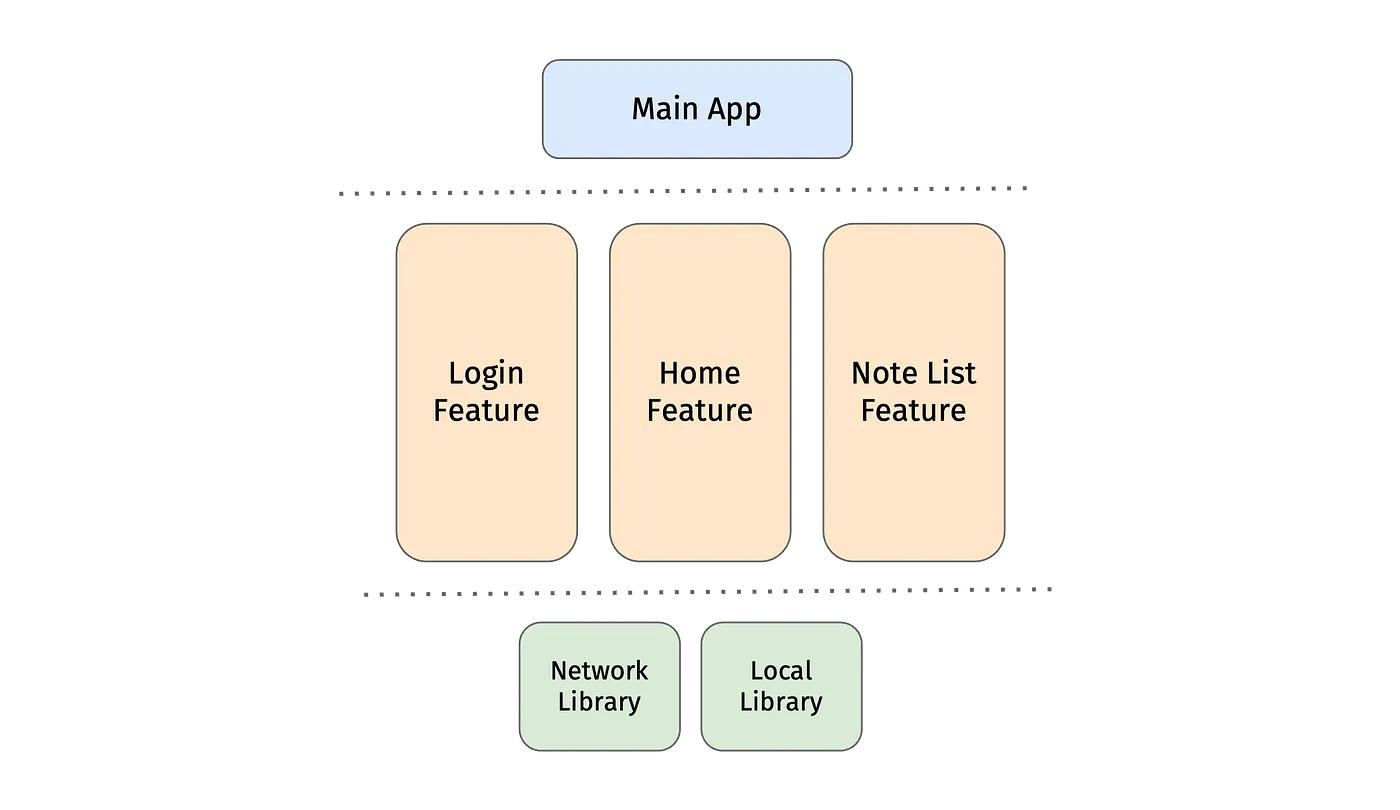
A sample three-layer modular structure -
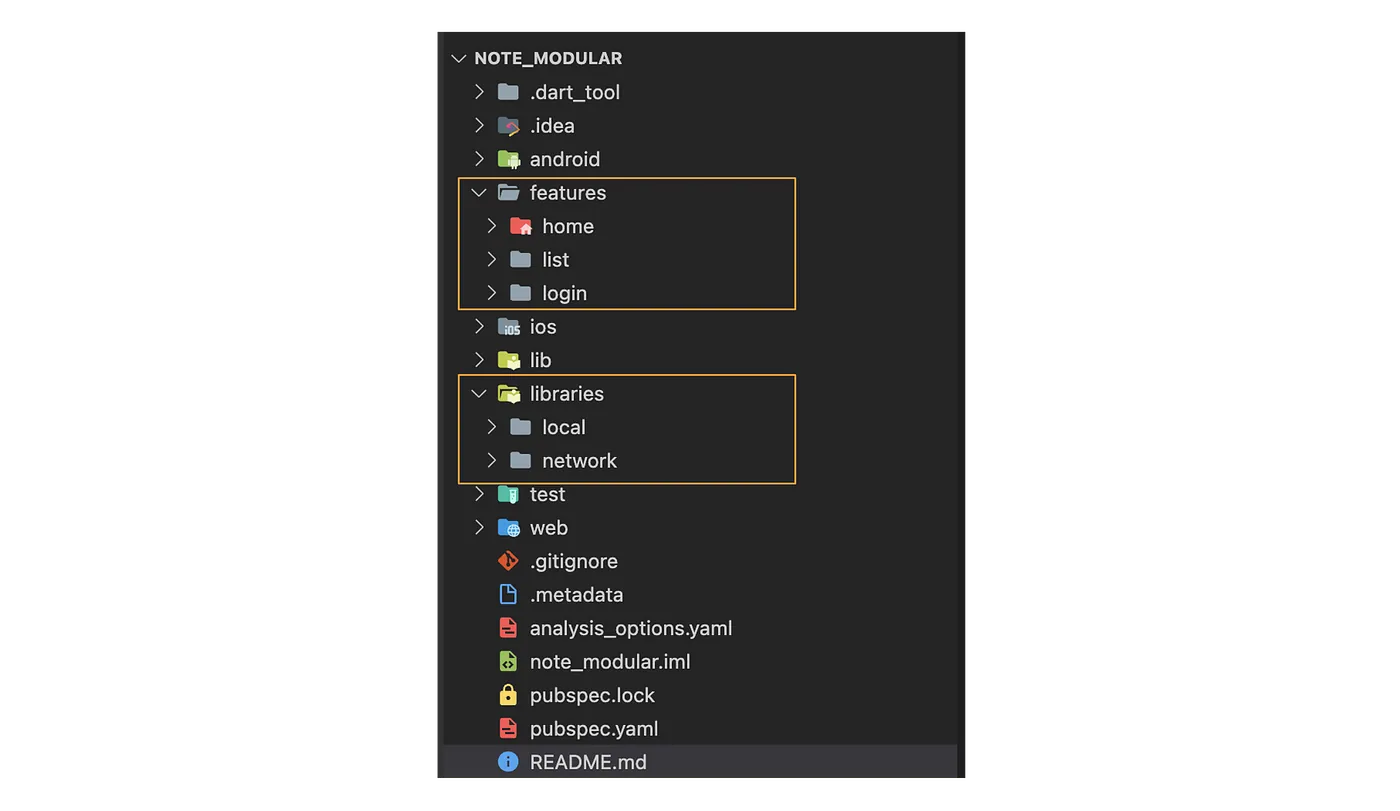
The project’s package structure
Resources
- Boosting Flutter Productivity with Modular Architecture The talk this article grew from
- Webinar recording YouTube
- Melos Monorepo tool
Continue reading “Boosting Flutter Productivity Through Modularization” on Medium
More writing
- Eliminating UI Jank: Flutter Concurrency with Isolate & Compute Level Up Coding · Flutter · 6 min read
- Flutter Web Responsive: Adaptive UIs for Mobile, Tablet & Web Stackademic · Flutter · 8 min read
- Building a Secure Google Sign-In with Flutter & Node.js Level Up Coding · Auth · 6 min read
- All articles → Agents, retrieval, Flutter and working with AI